Category: Skin types

  • Skincare Routine for Oily Skin: A Complete Step-by-Step Guide for Clear, Healthy Skin

    Skincare routine for oily skin is essential to control excess oil, prevent acne, and maintain healthy, balanced skin. Excess shine, clogged pores, frequent breakouts, and makeup that doesn’t last—if you have oily skin, you probably deal with all of this regularly. But the truth is that establishing a proper Skincare Routine for Oily Skin can greatly improve your skin’s health.

    Following a proper Skincare Routine for Oily Skin can help control excess oil, prevent acne, and keep your skin balanced and healthy without stripping it of moisture. In this guide, you’ll learn exactly what oily skin needs, what to avoid, and how to build a simple yet effective Skincare Routine for Oily Skin that actually works.


    What is Oily Skin ?

    Oily skin occurs when the sebaceous glands produce excess sebum. While sebum helps protect and hydrate the skin, too much of it can lead to:

    • Greasy or shiny appearance
    • Enlarged pores
    • Blackheads and whiteheads
    • Frequent acne breakouts

    Genetics, hormones, stress, weather, and even wrong skincare products can increase oil production. The good news? A consistent skincare routine can keep oil under control without damaging your skin barrier.


    Why a Proper Skin Care Routine for Oily Skin Is Important

    Many people with oily skin make the mistake of over-cleansing or using harsh products. This actually makes the skin produce even more oil to compensate.

    A good routine helps to:

    • Balance oil production
    • Keep pores clean
    • Reduce acne and breakouts
    • Improve skin texture
    • Maintain hydration without heaviness

    The key is balance, not stripping.


    Morning Skin Care Routine for Oily Skin
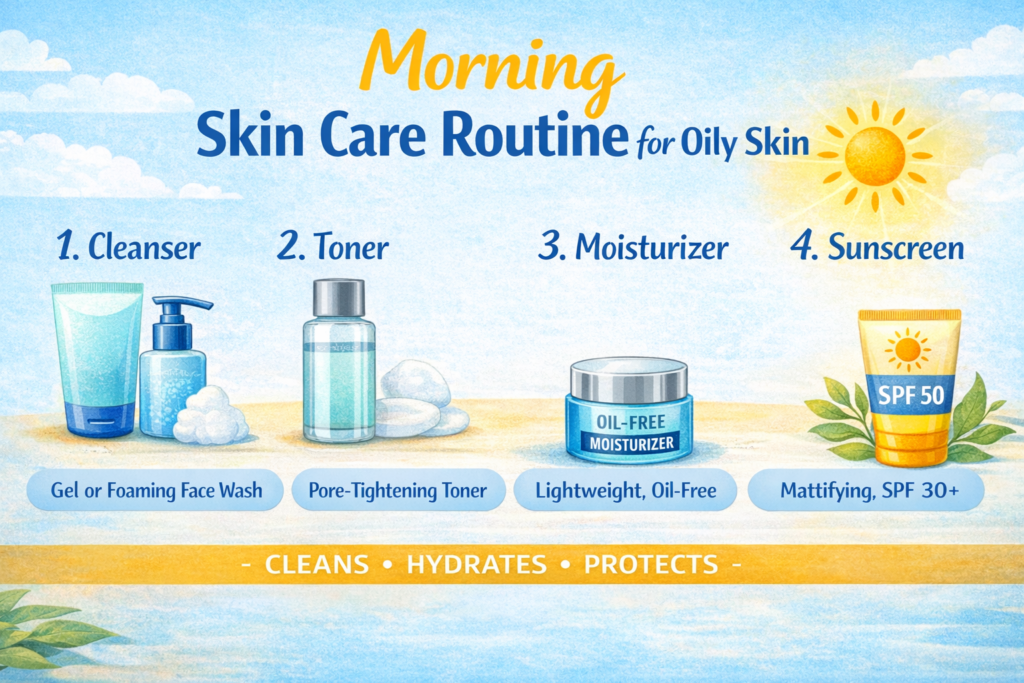
    Your morning routine should focus on cleansing excess oil, protecting your skin, and keeping shine under control throughout the day.

    1. Cleanser (Most Important Step)

    Start your day with a gentle foaming or gel-based cleanser. This removes overnight oil, sweat, and bacteria without drying your skin.

    Look for ingredients like:

    • Salicylic acid
    • Tea tree
    • Niacinamide
    • Green tea

    Avoid: Creamy, heavy cleansers that leave residue.

    Tip: Wash your face twice a day only. Overwashing can trigger more oil.


    2. Toner (Optional but Helpful)

    A toner helps remove leftover impurities and tightens pores. For oily skin, it also controls shine.

    Best toner ingredients for oily skin:

    • Witch hazel (alcohol-free)
    • Niacinamide
    • Glycolic acid (low percentage)

    Avoid toners with high alcohol content as they dry out the skin.


    3. Lightweight Moisturizer (Yes, Oily Skin Needs It)

    Skipping moisturizer is a big mistake. When oily skin lacks hydration, it produces more oil.

    Choose:

    • Oil-free
    • Gel or water-based
    • Non-comedogenic formulas

    A good moisturizer keeps your skin hydrated while controlling excess oil.


    4. Sunscreen (Never Skip This)

    Sunscreen is essential in any skin care routine for oily skin. Sun damage can worsen acne marks, enlarge pores, and increase oiliness.

    Best sunscreen type for oily skin:

    • Gel-based or matte sunscreen
    • SPF 30 or higher
    • Non-greasy, non-comedogenic

    Apply sunscreen every morning, even if you stay indoors.


    Night Skin Care Routine for Oily Skin
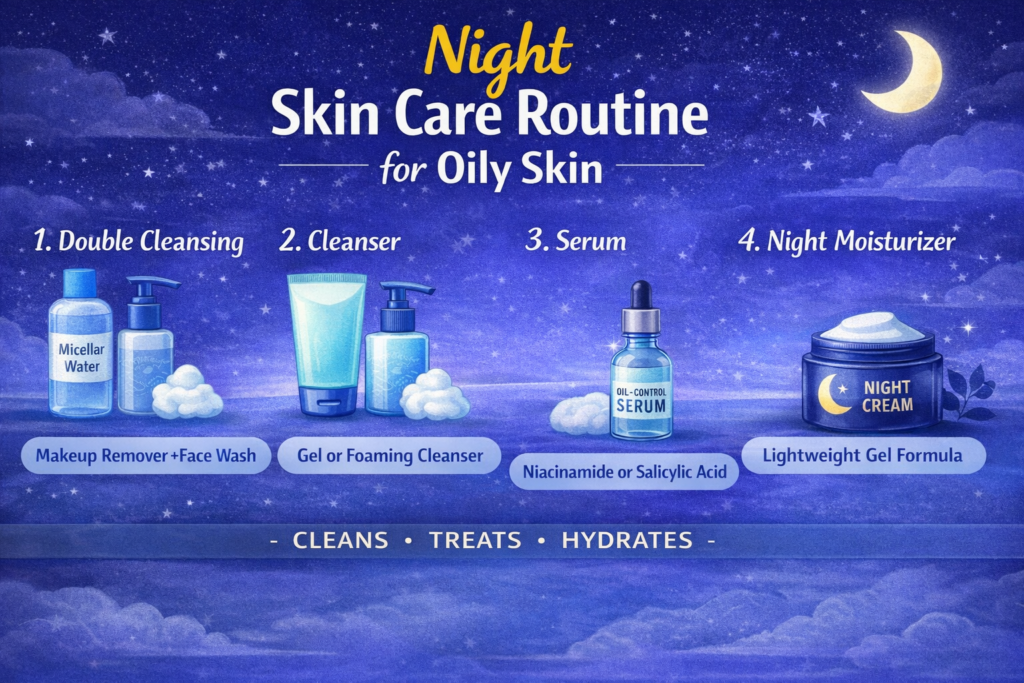
    Nighttime is when your skin repairs itself. Your routine should focus on deep cleansing and treatment.

    1. Double Cleansing (If You Wear Makeup or Sunscreen)

    Start with a lightweight cleansing oil or micellar water to remove sunscreen and makeup. Follow with your regular face wash.

    Don’t worry—oil cleansers don’t make your skin oilier if rinsed properly.


    2. Cleanser

    Use the same gentle cleanser as your morning routine. This step ensures your pores are clean and ready for treatment products.


    3. Treatment Serum

    This is where oily skin can really improve.

    Best serums for oily skin:

    Use only one active at a time to avoid irritation.


    4. Night Moisturizer

    Even at night, oily skin needs moisture. Choose a lightweight gel moisturizer that supports skin repair without clogging pores.


    Weekly Skin Care Routine for Oily Skin
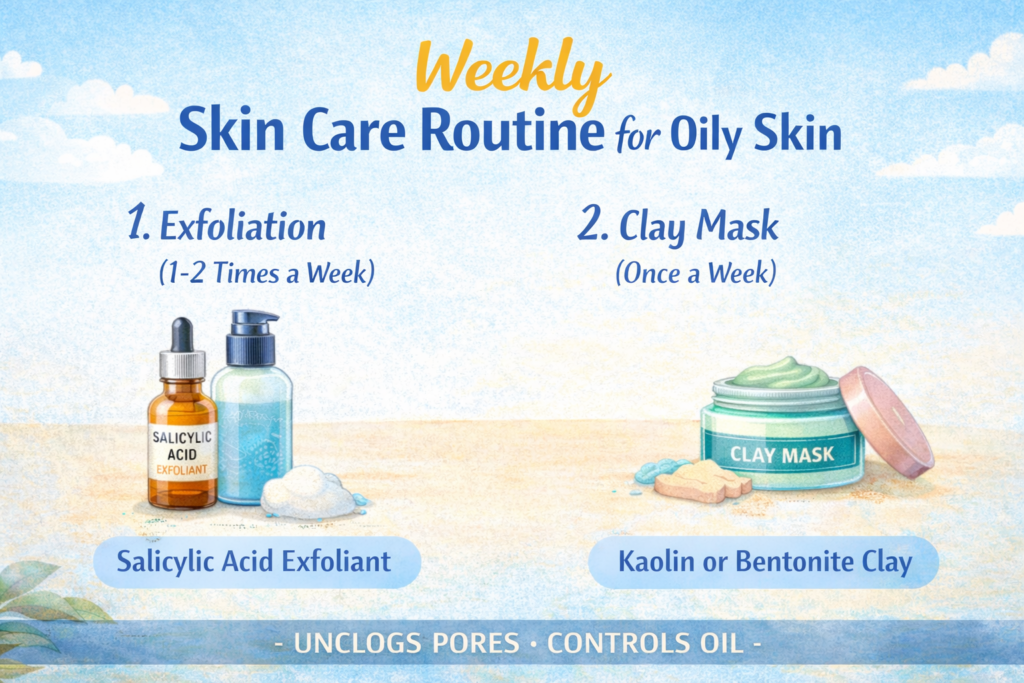
    Skincare Routine for Oily Skin

    1. Exfoliation (1–2 Times a Week)

    Exfoliation removes dead skin cells that clog pores and cause breakouts.

    Best exfoliants for oily skin:

    • Salicylic acid exfoliant
    • Mild chemical exfoliants

    Avoid harsh scrubs—they can damage your skin barrier.


    2. Clay Mask (Once a Week)

    Clay masks absorb excess oil and clean pores deeply.

    Best types:

    • Kaolin clay
    • Bentonite clay

    Do not overuse masks, as too much can dry your skin.


    Common Mistakes to Avoid If You Have Oily Skin

    • Overwashing your face
    • Skipping moisturizer
    • Using harsh alcohol-based products
    • Touching your face frequently
    • Using heavy makeup or skincare

    Avoiding these mistakes can significantly improve your skin.


    Diet and Lifestyle Tips for Oily Skin

    Your skincare routine works best when supported by healthy habits.

    • Drink plenty of water
    • Reduce junk and fried food
    • Eat fruits and vegetables
    • Manage stress
    • Get enough sleep

    Healthy skin always starts from within.


    Best Ingredients to Look for in a Skin Care Routine for Oily Skin

    • Salicylic acid
    • Niacinamide
    • Zinc
    • Green tea
    • Hyaluronic acid (yes, it’s safe for oily skin)

    These ingredients help control oil without damaging your skin.


    FAQs – Skin Care Routine for Oily Skin

    Q1. How many times should I wash my face if I have oily skin?

    Twice a day is enough. Washing too often can increase oil production.

    Q2. Can oily skin skip moisturizer?

    No. Skipping moisturizer makes oily skin produce even more oil.

    Q3. Which cleanser is best for oily skin?

    Gel-based or foaming cleansers with salicylic acid work best.

    Q4. Is sunscreen necessary for oily skin?

    Yes. Use a lightweight, gel-based sunscreen daily.

    Q5. How often should oily skin exfoliate?

    Exfoliate 1–2 times a week to prevent clogged pores.

    Q6. Can oily skin use face masks?

    Yes. Clay masks once a week help absorb excess oil.

    Q7. Which ingredients are good for oily skin?

    Niacinamide, salicylic acid, zinc, and green tea are ideal.

    Q8. Does oily skin get acne easily?

    Yes, but a proper skin care routine can prevent breakouts.


    Summary

    A proper skin care routine for oily skin doesn’t have to be complicated. The goal is to cleanse gently, hydrate properly, and control oil without stripping your skin. With consistency and the right products, oily skin can look healthy, balanced, and glowing.

    Remember, oily skin ages slower than dry skin—so treat it right, and it will reward you in the long run.
  • Korean Skincare Routine: 10 Steps for Glass Skin

    If you’ve ever admired the flawless, glowing complexions of Korean celebrities or beauty influencers, chances are you’ve already heard about skincare routines that are popular in Korea. More than just a beauty trend, this philosophy focuses on long-term skin health, hydration, and prevention rather than quick fixes.

    In this blog, you’ll learn what a Korean skincare routine is, why it works so well, and how you can follow it step by step—whether you’re a beginner or a skincare enthusiast. By the end of this blog, you’ll know exactly how to build a routine that helps you achieve radiant, healthy-looking skin.


    What Is a Korean Skincare Routine?

    A skincare routine from Korea is a multi-step approach developed in South Korea that prioritizes gentle care, hydration, and layering lightweight products. Unlike minimal routines that focus on just cleansing and moisturizing, it emphasizes treating the skin with nourishing ingredients at every stage.

    The goal isn’t perfection—it’s glass skin, a term used to describe skin that looks clear, smooth, luminous, and deeply hydrated from within.


    The global popularity of the Korean skincare routine is no accident. It works because it’s based on science-backed skincare principles and consistency.

    Key Reasons for Its Popularity:

    • Focus on hydration and barrier repair
    • Gentle, skin-friendly ingredients
    • Customizable for all skin types
    • Prevents skin issues before they start
    • Encourages self-care and mindful skincare habits

    Rather than harsh treatments, Korean skincare builds skin strength over time.


    The Core Philosophy Behind Korean Skincare

    Before diving into the steps, it’s important to understand the mindset behind the Korean skincare routine:

    1. Prevention Over Cure – Protect your skin early to avoid future issues.
    2. Layering Hydration – Multiple light layers hydrate better than one heavy cream.
    3. Gentle Formulations – Avoid stripping the skin of natural oils.
    4. Consistency Is Key – Daily care matters more than occasional treatments.

    ( Healthy skin is always the priority—not flawless skin. Korean skincare believes that if your skin is hydrated, calm, and protected, most skin concerns naturally reduce over time.

    That’s why this routine avoids harsh scrubs, excessive exfoliation, and aggressive treatments.)

    Korean Skincare Routine Steps (Morning & Night)

    korean skincare routine

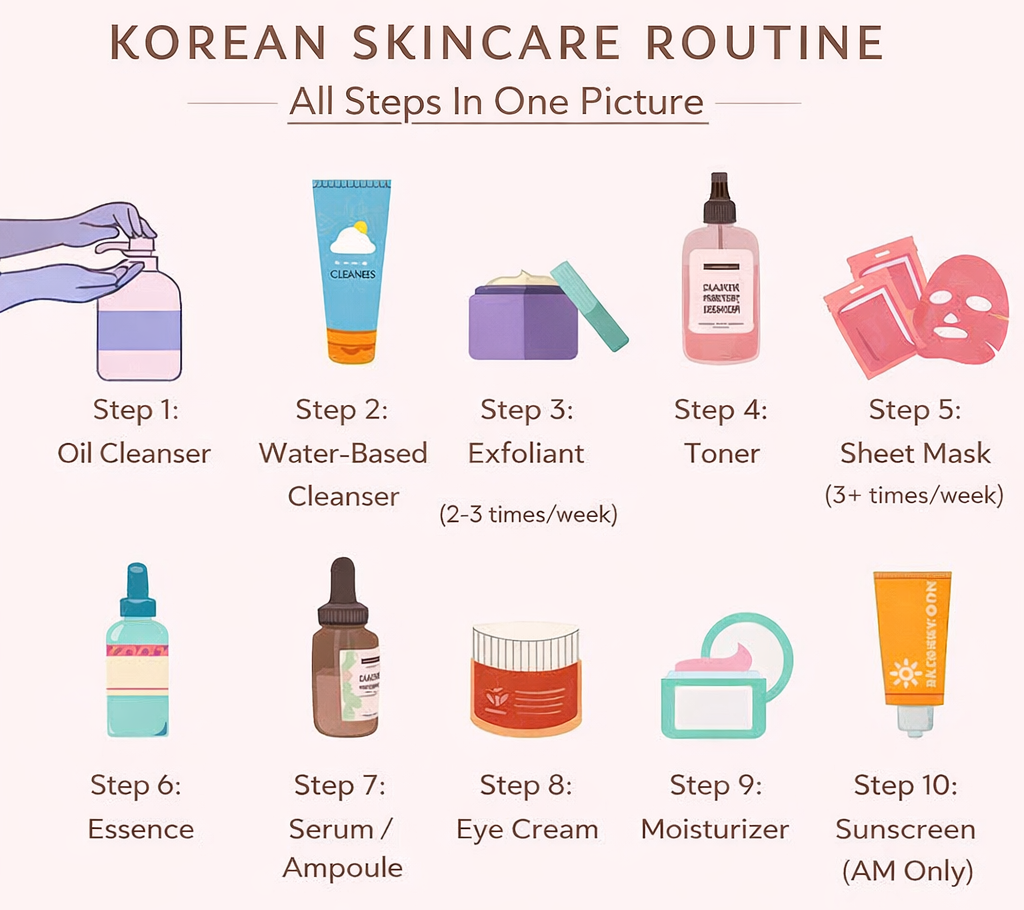
    Let’s break down the traditional 10-step routine from Korea and understand the role of each step.


    1. Oil-Based Cleanser

    The first step of the korean skincare routine is oil cleansing. This removes makeup, sunscreen, and excess oil from the skin.

    Even oily and acne-prone skin can benefit from this step when done correctly.

    Why it matters:
    Oil attracts oil, making this step essential even for oily or acne-prone skin.

    Pro tip: Massage gently on dry skin, then emulsify with water.


    2. Water-Based Cleanser

    After oil cleansing, use a gentle water-based cleanser to remove sweat and dirt. Your skin should feel clean but never tight or dry.

    This double cleansing method is a core part of the korean skincare routine.

    Why it matters:
    This double cleansing method ensures your skin is truly clean without being stripped.


    3. Exfoliator (2–3 Times a Week)

    Exfoliation removes dead skin cells and improves product absorption.

    Why it matters:
    It smoothens skin texture and boosts natural glow.

    Avoid over-exfoliating, as it can damage the skin barrier.

    In the korean skincare routine, exfoliation is gentle and limited.


    4. Toner

    Korean toners are hydrating, not harsh.

    This step adds the first layer of hydration.

    Why it matters:
    Toners balance the skin’s pH and prep it for better absorption of the next steps.


    5. Essence (The Heart of Korean Skincare)

    Essence is what makes a skincare routine from Korea truly unique. It helps with hydration, skin repair, and glow. It is a lightweight, hydrating product packed with active ingredients.

    Why it matters:
    It promotes cell renewal and deep hydration—this step truly defines the korean skincare routine.


    6. Serum or Ampoule

    Serums and ampoules target specific skin concerns like acne, pigmentation, dullness, or fine lines.

    Choose one serum based on your skin need—more is not always better.

    Why it matters:
    They deliver concentrated ingredients deep into the skin.


    7. Sheet Mask (2–3 Times a Week)

    Sheet masks provide instant hydration , glow and relaxation. In the Korean skincare routine, they are used 2–3 times a week, not daily.

    They are perfect when your skin feels tired or dull.

    They are not mandatory but highly effective in the korean skincare routine.

    Why it matters:
    They help soothe, nourish, and plump the skin.


    8. Eye Cream

    The skin around the eyes is thinner , more delicate and needs extra care.

    Always apply using gentle tapping motions.

    Why it matters:
    Eye cream prevents fine lines, dark circles, and dryness.


    9. Moisturizer

    Moisturizer locks in all the layers you’ve applied.

    Skipping this step can undo all your efforts.

    Why it matters:
    It strengthens the skin barrier and prevents moisture loss.


    10. Sunscreen (Morning Only)

    Sunscreen is non-negotiable in any skincare routine from Korea. Without it, no routine can show long-term results.

    Why it matters:
    UV protection prevents premature aging, pigmentation, and skin damage.


    Morning vs Night Korean Skincare Routine

    Morning Routine:

    • Gentle cleanser
    • Toner
    • Essence
    • Serum
    • Moisturizer
    • Sunscreen

    Night Routine:

    • Oil cleanser
    • Water-based cleanser
    • Toner
    • Essence
    • Serum/Ampoule
    • Sheet mask (optional)
    • Eye cream
    • Moisturizer

    Nighttime focuses on repair, while morning routines focus on protection.


    Korean Skincare Routine for Different Skin Types

    For Oily Skin

    • Lightweight gel cleansers
    • Non-comedogenic moisturizers
    • Niacinamide-based serums

    For Dry Skin

    • Creamy cleansers
    • Hydrating toners and essences
    • Rich moisturizers with ceramides

    For Sensitive Skin

    • Minimal routine
    • Fragrance-free products
    • Soothing ingredients like centella asiatica

    For Acne-Prone Skin

    • Gentle exfoliation
    • Anti-inflammatory ingredients
    • Consistent sunscreen use

    [The Korean skincare routine can always be adjusted according to your skin.]

    Common Ingredients in Korean Skincare

    One reason the korean skincare routine is so effective is its ingredient innovation.

    Popular ingredients include:

    • Snail mucin – Repair and hydration
    • Centella asiatica – Calming and healing
    • Hyaluronic acid – Deep hydration
    • Green tea – Antioxidant protection
    • Rice extract – Brightening and smoothing

    These ingredients focus on healing, not harming the skin.

    Mistakes to Avoid in a Korean Skincare Routine

    • Using too many products at once
    • Skipping sunscreen
    • Over-exfoliating
    • Not patch testing new products
    • Expecting overnight results

    Korean skincare rewards patience and consistency.


    How Long Does It Take to See Results?

    With a consistent korean skincare routine, you may notice:

    • Improved hydration within 1–2 weeks
    • Smoother texture in 3–4 weeks
    • Visible glow and clarity in 6–8 weeks

    Remember, skincare is a journey, not a race.


    Summary : Is the Korean Skincare Routine Worth It?

    Absolutely. The korean skincare routine is more than just multiple steps—it’s a holistic approach to skin health. Whether you follow all 10 steps or simplify it to suit your lifestyle, the core principles of hydration, protection, and gentleness can transform your skin over time.

    Healthy skin always looks better than perfect skin.

    If you’re looking for glowing, healthy, and resilient skin, adopting a Korean skincare routine can be a game-changer.

    Korean Skincare Routine – Important FAQs

    1. Can I use Korean skincare products if I already use active ingredients like retinol or vitamin C?

    Yes, you can use Korean skincare with active ingredients, but avoid layering too many actives at the same time. It is better to use strong actives at night and focus on hydration and repair products in the morning.


    2. Should I apply Korean skincare products on damp or dry skin?

    Most Korean skincare products like toner and essence work best on slightly damp skin, as this helps lock in hydration and improves absorption.


    3. What should I do if my skin breaks out after starting the Korean skincare routine?

    Breakouts can happen if too many new products are introduced at once. Reduce the number of products, identify the one causing irritation, and slowly reintroduce products one by one.


    4. Can I follow the Korean skincare routine even if I don’t wear makeup?

    Yes, even if you don’t wear makeup, the Korean skincare routine helps protect your skin from pollution, sun damage, and dehydration.


    5. Is it okay to change products frequently in the Korean skincare routine?

    No, frequent product changes can confuse the skin and cause irritation. It is better to use one product consistently for a few weeks before switching.


    6. How much product should I use at each step?

    Using a small, pea-sized amount for most steps is enough. Applying too much product can overload the skin and reduce absorption.


    7. Can I shorten the Korean skincare routine on busy days?

    Yes, on busy days you can follow a simplified routine with cleanser, moisturizer, and sunscreen without affecting long-term results.


    8. Is glass skin possible for everyone?

    Glass skin looks different on everyone. The goal is healthy, hydrated skin—not unrealistic perfection.

  • Benefits of Aloe Vera on Face: A Complete Natural Skincare Guide

    https://m.media-amazon.com/images/I/71gOI9Ov6IL._AC_UF1000%2C1000_QL80_.jpg

    Benefits of aloe vera on face have been trusted for centuries, from ancient Ayurvedic practices to modern dermatology-inspired skincare routines. Aloe vera is one of those rare natural ingredients that suits almost every skin type—dry, oily, sensitive, acne-prone, and even aging skin. What makes it truly special is its ability to heal, hydrate, and protect the skin at the same time.

    In today’s world of chemical-loaded skincare products, aloe vera stands out as a gentle, affordable, and highly effective solution. Whether you’re dealing with acne, pigmentation, dullness, or dryness, aloe vera can easily become your skin’s best friend.

    In this blog, we will explore all the benefits of aloe vera on face, how to use it correctly, who should use it, and common mistakes to avoid—written in a natural, human-friendly way.


    What Is Aloe Vera and Why Is It So Powerful?

    Aloe vera is a succulent plant with thick green leaves filled with a transparent gel. This gel contains more than 75 active compounds, including:

    • Vitamins A, C, and E
    • Vitamin B12 and folic acid
    • Antioxidants
    • Enzymes
    • Amino acids
    • Salicylic acid

    These nutrients work together to repair skin damage, boost hydration, fight bacteria, and slow down signs of aging. This is why the benefits of aloe vera on face are both instant and long-term.


    Top Benefits of Aloe Vera on Face

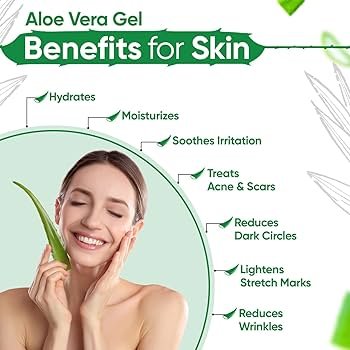
    1. Deeply Moisturizes the Skin Naturally

    One of the most well-known benefits of aloe vera on face is its intense moisturizing power. Aloe vera gel penetrates deep into the skin layers without clogging pores.

    • Keeps skin soft and supple
    • Ideal for dry and dehydrated skin
    • Lightweight and non-greasy

    Unlike heavy creams, aloe vera hydrates the skin while allowing it to breathe, making it perfect for daily use.


    2. Helps Treat Acne and Pimples

    If you struggle with acne, aloe vera can be a game changer. Its antibacterial and anti-inflammatory properties help reduce acne-causing bacteria and calm irritated skin.

    How it helps acne-prone skin:

    • Reduces redness and swelling
    • Clears clogged pores
    • Controls excess oil production
    • Speeds up pimple healing

    Using aloe vera regularly can visibly improve acne over time, making it one of the most trusted benefits of aloe vera on face.


    3. Soothes Sunburn and Skin Irritation

    Sun exposure can damage your skin barrier, leading to redness, burning, and peeling. Aloe vera acts as a natural cooling agent that instantly calms sunburnt skin.

    • Reduces burning sensation
    • Repairs sun-damaged skin
    • Restores lost moisture

    This makes aloe vera an essential after-sun skincare remedy.


    4. Reduces Dark Spots and Pigmentation

    Another important benefit of aloe vera on face is its ability to lighten pigmentation naturally. Aloe vera contains aloesin, a compound that helps reduce melanin production.

    With consistent use:

    • Dark spots fade gradually
    • Uneven skin tone improves
    • Skin looks clearer and brighter

    Patience is key, as natural remedies work slowly but safely.


    5. Slows Down Signs of Aging

    Aloe vera is rich in antioxidants and vitamins that help fight free radicals responsible for premature aging.

    Anti-aging benefits include:

    • Reduces fine lines and wrinkles
    • Improves skin elasticity
    • Boosts collagen production

    Regular application can make your skin look youthful, firm, and glowing.


    6. Heals Wounds and Acne Scars Faster

    One of the lesser-known benefits of aloe vera on face is its powerful healing ability. Aloe vera speeds up cell regeneration, helping wounds, cuts, and acne scars heal faster.

    • Minimizes scar appearance
    • Repairs damaged skin cells
    • Improves overall skin texture

    This makes aloe vera ideal for post-acne skincare routines.


    7. Suitable for Sensitive Skin

    Sensitive skin often reacts badly to chemical products. Aloe vera, being natural and gentle, is usually well tolerated.

    • Reduces itching and irritation
    • Strengthens the skin barrier
    • Calms allergic reactions

    Always do a patch test before full application.


    8. Natural Glow Booster

    If your skin looks dull or tired, aloe vera can revive it. One of the most loved benefits of aloe vera on face is the healthy glow it provides.

    • Improves blood circulation
    • Hydrates deeply
    • Makes skin look fresh and radiant

    You’ll notice a natural glow with regular use.


    How to Use Aloe Vera on Face Correctly

    benefits of aloe vera on face

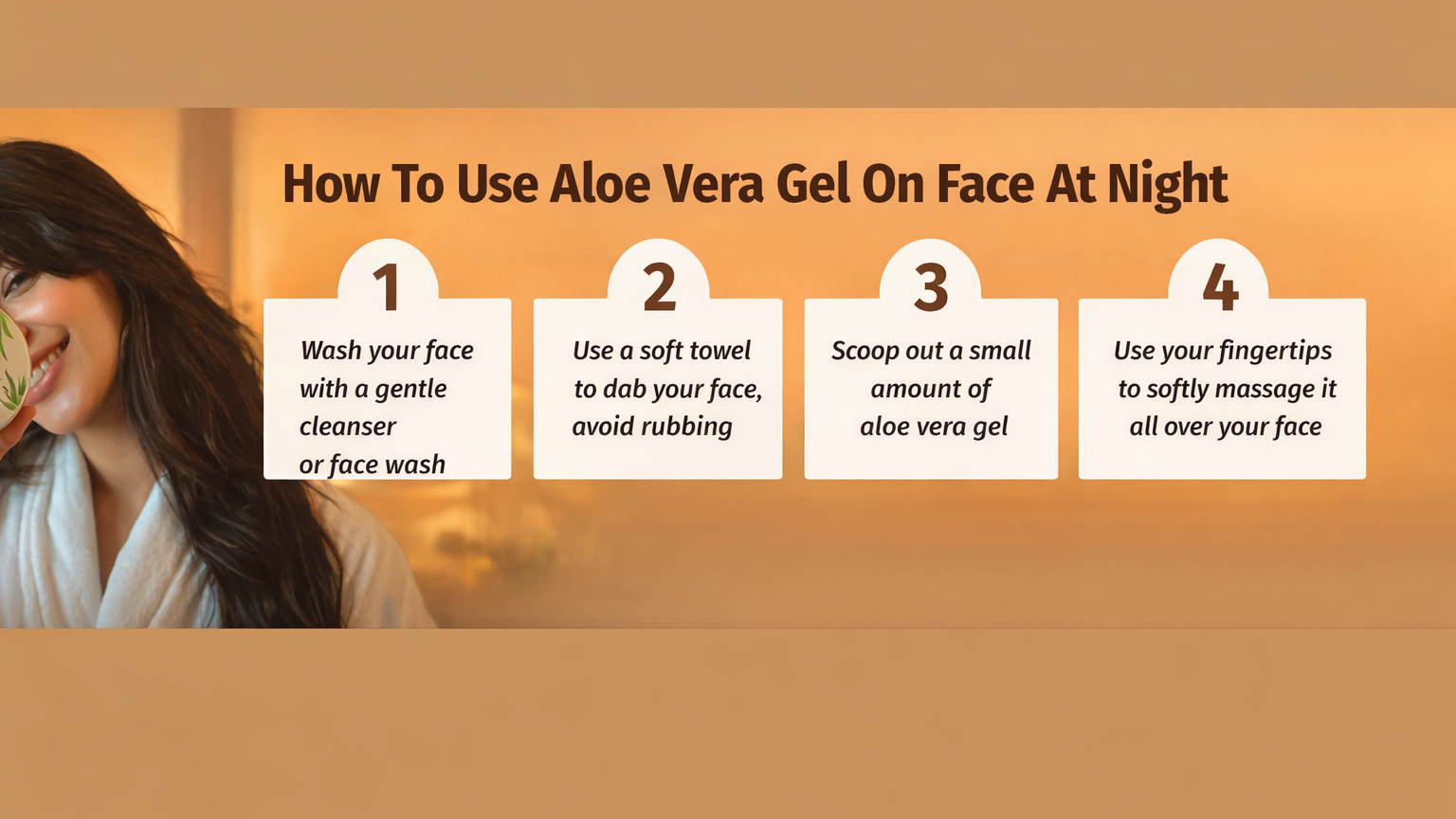
    1. Aloe Vera as a Daily Face Gel

    Apply a thin layer of fresh aloe vera gel on clean skin before bedtime. Leave it overnight and wash in the morning.

    2. Aloe Vera Face Pack

    Mix aloe vera gel with:

    • Honey (for dry skin)
    • Rose water (for glowing skin)
    • Turmeric (for acne)

    Apply for 15–20 minutes, then rinse.

    3. Aloe Vera as a Makeup Base

    Aloe vera works well as a natural primer by smoothing and hydrating the skin.


    Fresh Aloe Vera vs Store-Bought Gel

    Fresh Aloe Vera Gel

    • 100% natural
    • No preservatives
    • Best results

    Store-Bought Aloe Vera Gel

    • Convenient
    • Choose alcohol-free and fragrance-free options
    • Check ingredient list carefully

    Both can offer great benefits of aloe vera on face if used correctly.


    Who Should Avoid Aloe Vera on Face?

    While aloe vera suits most people, some may experience mild irritation.

    Avoid or patch test if:

    • You have extremely sensitive skin
    • You are allergic to aloe vera
    • You feel itching or redness after use

    Always do a patch test on your wrist before applying to your face.


    Common Mistakes to Avoid

    • Using aloe vera on dirty skin
    • Applying too much product
    • Skipping patch tests
    • Expecting overnight results

    Natural skincare requires consistency and patience.


    FAQs: Benefits of Aloe Vera on Face

    Can I apply aloe vera on face daily?
    Yes, aloe vera is safe for daily use on most skin types.

    Is aloe vera good for oily skin?
    Absolutely. It hydrates without making skin greasy.

    Can aloe vera remove pimples permanently?
    It helps control acne but must be used consistently with a proper routine.

    Can I leave aloe vera on face overnight?
    Yes, overnight application gives the best results.


    Summary

    The benefits of aloe vera on face make it one of the most powerful and versatile natural skincare ingredients available. From acne control and hydration to anti-aging and glow enhancement, aloe vera truly does it all.

    If you’re looking for a simple, affordable, and effective way to improve your skin naturally, aloe vera deserves a permanent place in your skincare routine. Stay consistent, choose pure products, and let nature work its magic on your skin.