Category: Face care

  • How to Get Rid of Dark Circles : Causes, Quick Fixes & Long-Term Solutions

    how to get rid of dark circles
    https://www.drhealthclinic.com/wp-content/uploads/2025/03/what-causes-dark-circles-under-eyes-2-1.webp

    Let’s be honest—dark circles are frustrating.
    You wake up, look in the mirror, and even after a full face wash… your eyes still look tired. That’s why so many people keep searching for how to get rid of dark circles —because nobody wants complicated routines or confusing advice.

    The good news?
    You don’t need expensive treatments or 20 products. You just need the right habits, the right ingredients, and consistency.

    This blog explains dark circles briefly but effectively—covering causes, quick remedies, skincare ingredients, lifestyle habits, and medical options—so you can choose what works best for you.


    How to Get Rid of Dark Circles in Briefly (Quick Answer)

    If you want a short and clear answer, here it is:

    You can get rid of dark circles briefly by sleeping 7–8 hours daily, staying hydrated, using sunscreen and eye cream, applying cold compresses, reducing screen time, and following simple home remedies like cold compresses and aloe vera.

    Now let’s understand why dark circles happen and how to fix them properly, explained in a brief and easy way.


    What Are Dark Circles?

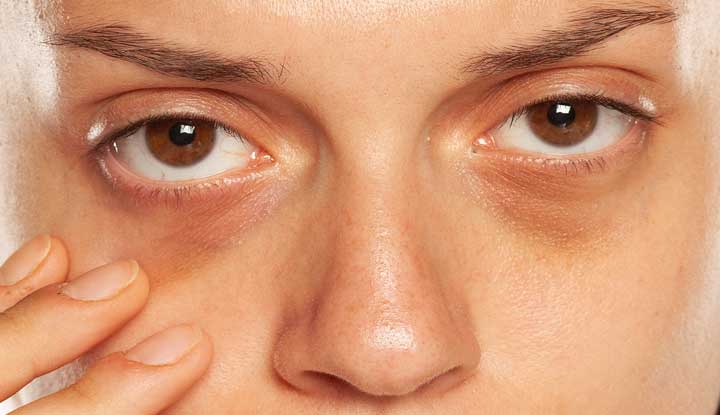
    Dark circles are dark, pigmented, or shadowed areas under the eyes. The skin around the eyes is thin and sensitive, so blood vessels, pigmentation, and hollows are more visible here.

    Dark circles don’t always mean poor health—sometimes they’re just genetic or lifestyle-related.


    Main Causes of Dark Circles

    1. Lack of Sleep

    Not getting enough sleep causes blood vessels to widen, making the under-eye area appear darker.

    2. Genetics

    Some people naturally have dark circles due to hereditary pigmentation or deep-set eyes.

    3. Excess Screen Time

    Long hours on phones or laptops strain the eyes and reduce blood circulation.

    4. Dehydration

    When the body lacks water, the under-eye skin looks dull and sunken.

    5. Sun Exposure

    UV rays increase melanin, leading to pigmentation around the eyes.

    6. Aging

    With age, collagen decreases and skin becomes thinner, making dark circles more visible.


    Types of Dark Circles

    https://cdn.shopify.com/s/files/1/0639/3017/1619/files/Types_of_Dark_Circles.jpg?v=1734502363
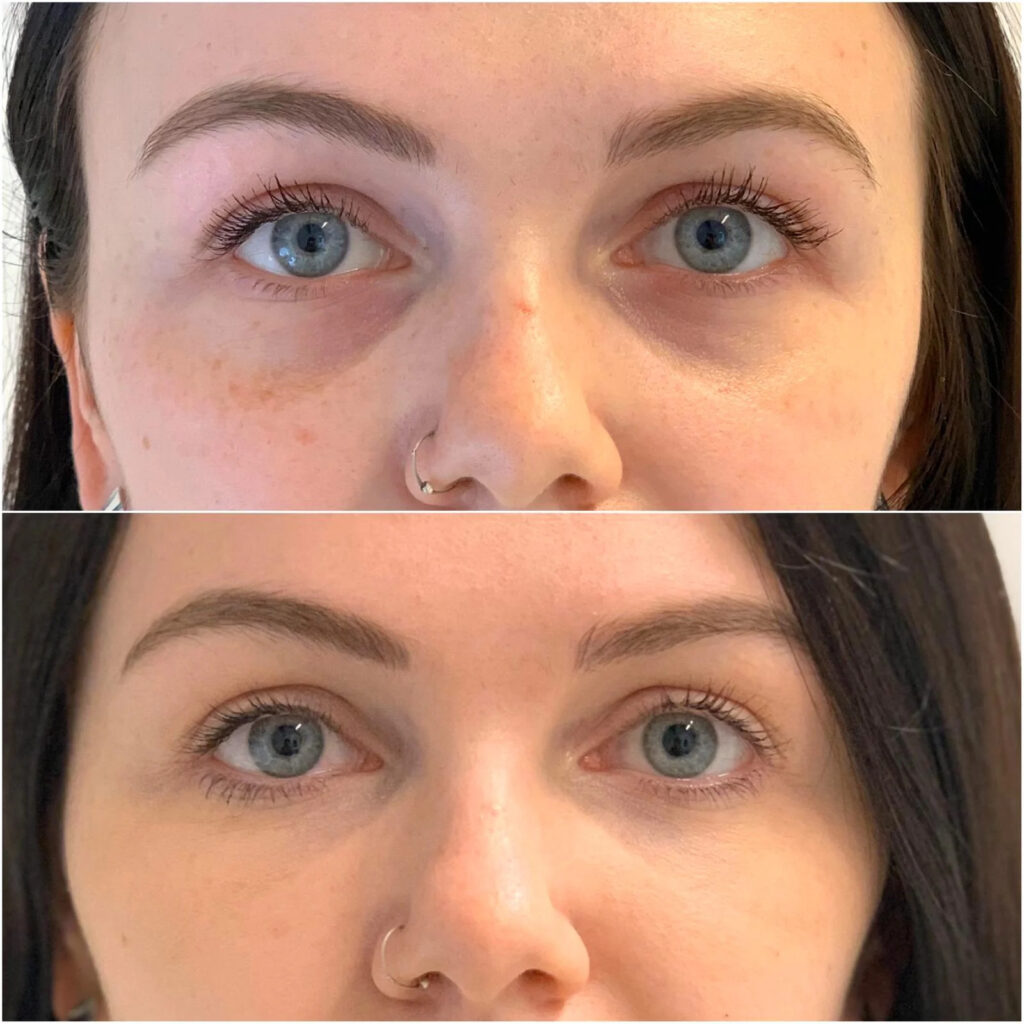
    https://www.hushla.net/wp-content/uploads/2024/06/dermal-fillers-for-under-eye-hollows-before-after-Los-Angeles-5-1024x1024.jpg

    Understanding the type helps you learn how to get rid of dark circles in briefly and correctly.

    . Pigmented Dark Circles

    Brown or black in color, caused by excess melanin.

    . Vascular Dark Circles

    Blue, purple, or reddish, caused by visible blood vessels.

    . Structural Dark Circles

    They are caused by under-eye hollows that create shadows.


    How to Get Rid of Dark Circles at Home

    1. Cold Compress

    Reduces puffiness and tightens blood vessels.

    How to use:
    Apply ice wrapped in cloth for 5–10 minutes daily.


    2. Cucumber Slices

    Soothes tired eyes and reduces pigmentation.

    It also cools the skin .

    How to use:
    Place chilled cucumber slices on eyes for 15 minutes.


    3. Aloe Vera Gel

    Hydrates skin and improves elasticity. Also soothes, and improves skin texture.

    How to use:
    Apply pure aloe vera gel under eyes before sleeping.


    4. Tea Bags

    Tea contains caffeine and antioxidants that reduce darkness.

    Caffeine improves blood circulation and reduces darkness.

    How to use:
    Place cold green or black tea bags on eyes for 10 minutes.


    5. Rose Water

    Refreshes eyes , calms the skin and lightens under-eye area.

    How to use:
    Apply with cotton pads twice daily.


    Best Skincare Ingredients for Dark Circles (Brief Guide)

    When choosing an eye cream, look for these ingredients:

    • Vitamin C – Brightens pigmentation
    • Caffeine – Reduces puffiness
    • Hyaluronic Acid – Hydrates deeply
    • Niacinamide – Improves skin tone
    • Retinol (low %) – Boosts collagen (use at night)

    These ingredients help get rid of dark circles briefly and safely when used consistently.

    No need to use everything—one good eye cream is enough.


    How to Get Rid of Dark Circles in Briefly with Lifestyle Changes

    1. Improve Sleep Quality

    • Sleep 7–8 hours daily
    • Avoid mobile screens before bed

    2. Stay Hydrated

    Drink at least 2–3 liters of water daily.

    3.Eat a Healthy Diet

    Include:

    • Iron-rich foods (spinach, dates)
    • Vitamin K (broccoli, leafy greens)
    • Omega-3 fatty acids (nuts, seeds)

    4. Reduce Eye Strain

    Follow the 20-20-20 rule:
    Every 20 minutes, look 20 feet away for 20 seconds.


    Medical Treatments for Dark Circles (Brief Overview)

    If home remedies don’t work, dermatological treatments may help:

    ⚠️ Always consult a dermatologist before treatment.


    How Long Does It Take to See Results?

    • Home remedies: 2–4 weeks
    • Eye creams: 4–8 weeks
    • Medical treatments: 1–3 sessions

    Consistency matters more than quick fixes.


    Common Mistakes That Worsen Dark Circles

    • Rubbing eyes frequently
    • Skipping sunscreen around eyes
    • Using harsh products
    • Sleeping with makeup on

    Avoiding these mistakes helps you get rid of dark circles briefly and effectively.


    Can Dark Circles Be Removed Permanently?

    • Lifestyle-related dark circles: Yes, mostly reversible
    • Genetic or structural dark circles: Can be improved but not fully removed

    Summary : How to Get Rid of Dark Circles in Naturally & Effectively

    If you remember just one thing, remember this:

    Dark circles need care, not shortcuts.

    If you’re searching for how to get rid of dark circles in briefly, remember:

    ✔ Sleep well
    ✔ Stay hydrated
    ✔ Use eye cream daily
    ✔ Protect eyes from sun
    ✔ Be consistent

    Small daily habits create visible long-term results.

    If you stay consistent, your under-eye area will look brighter, healthier, and more refreshed.
  • Skincare Routine for Summer: A Complete Guide for Healthy, Glowing Skin

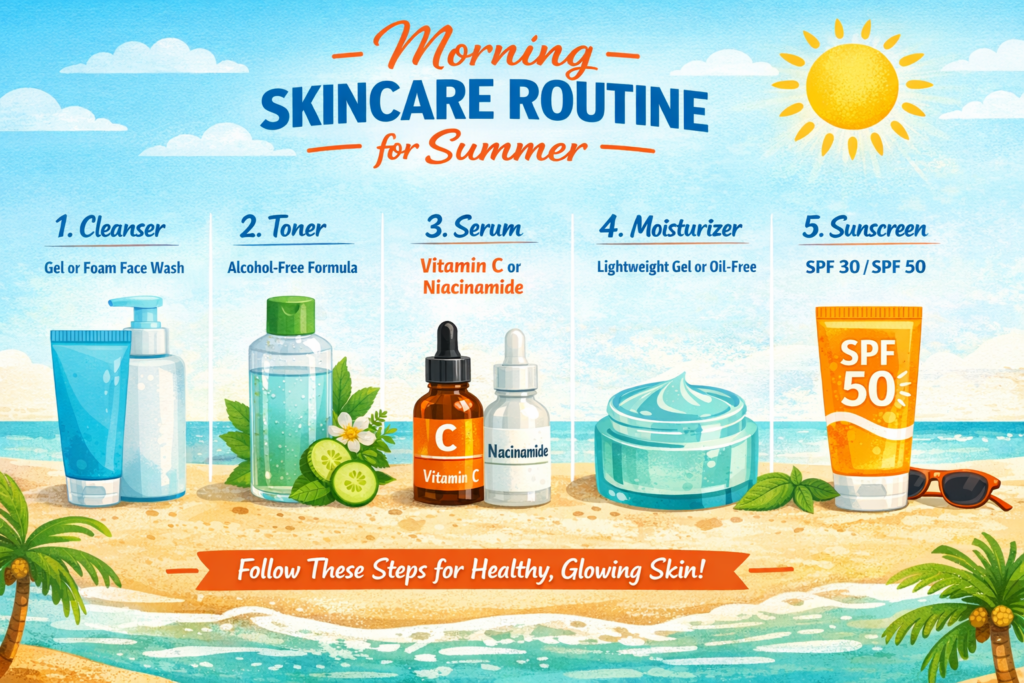
    Summer brings sunshine, vacations, and outdoor fun—but it also brings sweat, oil, tanning, acne, and dull skin. If you don’t change your skincare routine with the season, your skin can easily lose its balance. That’s why having the right skincare routine for summer is essential to keep your skin fresh, clear, and glowing.

    In this blog, you’ll find a complete summer skincare routine explained in a simple, human-friendly way. Whether you have oily, dry, combination, or sensitive skin, this guide will help you protect your skin from heat, humidity, and sun damage—while staying SEO-optimized and practical.


    Why You Need a Different Skincare Routine in Summer

    During summer, your skin produces more oil and sweat. UV rays are stronger, which can cause tanning, pigmentation, premature aging, and sunburn. Heavy products that worked in winter may clog pores and cause breakouts in summer.

    A good skincare routine for summer focuses on:

    • Lightweight hydration
    • Oil control
    • Sun protection
    • Preventing acne and dullness

    Step-by-Step Skincare Routine for Summer

    1. Cleanser: Start Fresh Every Day

    Cleansing is the most important step in summer skincare. Sweat, dirt, and oil build up quickly and can block pores.

    How to cleanse properly in summer:

    • Use a gentle, gel-based or foam cleanser
    • Wash your face twice daily (morning and night)
    • Avoid harsh soaps that strip natural oils

    Best ingredients to look for:

    • Salicylic acid (for oily & acne-prone skin)
    • Tea tree
    • Green tea
    • Aloe vera

    💡 Tip: Over-cleansing can increase oil production, so stick to two times a day.


    2. Toner: Balance and Refresh Your Skin

    Toner helps remove leftover impurities and balances your skin’s pH after cleansing.

    Why toner is important in summer:

    • Controls excess oil
    • Tightens pores
    • Adds light hydration

    Choose the right toner:

    • Alcohol-free formulas
    • Rose water, cucumber, witch hazel, or niacinamide-based toners

    Apply toner using a cotton pad or gently pat it into your skin with clean hands.


    3. Serum: Target Skin Concerns

    Serums are lightweight and perfect for summer skincare routines.

    Best serums for summer:

    • Vitamin C – Brightens skin and reduces tanning
    • Niacinamide – Controls oil and minimizes pores
    • Hyaluronic Acid – Keeps skin hydrated without heaviness

    Use 2–3 drops and gently massage into your skin. Always apply serum before moisturizer.


    4. Moisturizer: Yes, You Still Need It

    Many people skip moisturizer in summer, thinking it will make skin oily—but that’s a big mistake.

    Why moisturizer is important:

    • Maintains skin barrier
    • Prevents dehydration
    • Controls excess oil production

    Best summer moisturizers:

    • Gel-based
    • Oil-free
    • Water-based formulas

    Ingredients like aloe vera, hyaluronic acid, and ceramides are perfect for hot weather.


    5. Sunscreen: The Most Important Step

    No skincare routine for summer is complete without sunscreen. UV rays can damage your skin even on cloudy days.

    How to use sunscreen correctly:

    • Use SPF 30 or higher (SPF 50 is ideal)
    • Apply 15–20 minutes before going out
    • Reapply every 2–3 hours if outdoors

    Choose a sunscreen that is:

    • Broad-spectrum (UVA & UVB protection)
    • Lightweight and non-greasy
    • Suitable for your skin type

    Skipping sunscreen can lead to tanning, dark spots, wrinkles, and premature aging.


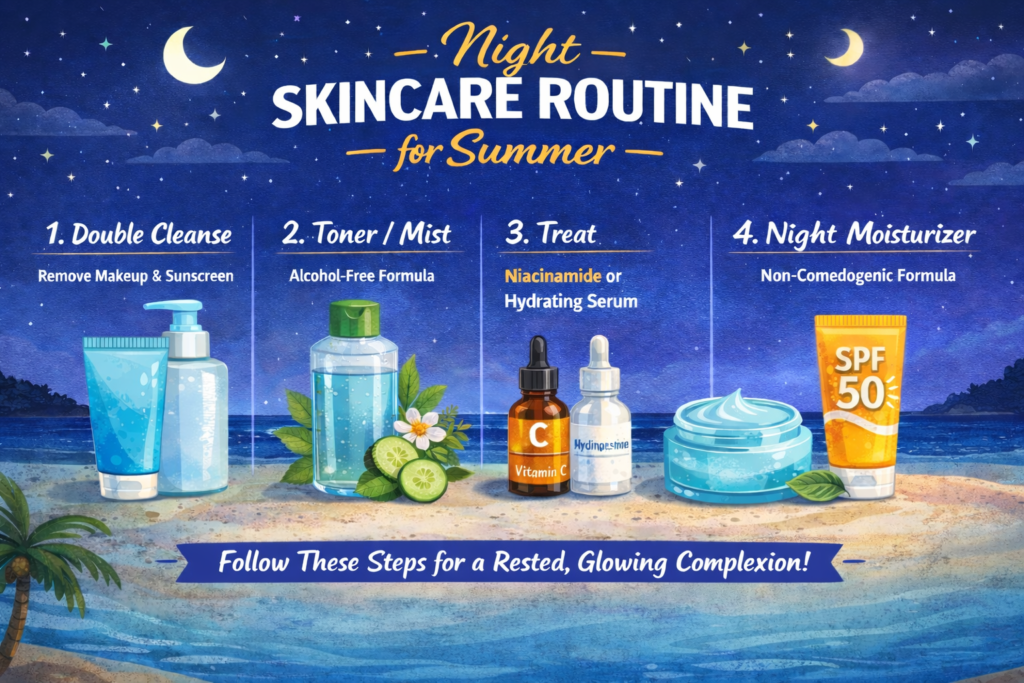
    Night Skincare Routine for Summer

    Nighttime is when your skin repairs itself. A proper night routine helps undo daily damage.

    Step 1: Double Cleanse (If You Wear Makeup or Sunscreen)

    • First cleanse with micellar water or cleansing balm
    • Follow with a gentle face wash

    Step 2: Toner or Hydrating Mist

    Use a soothing toner to calm your skin.

    Step 3: Treatment Serum

    You can use:

    • Niacinamide
    • Lightweight hydrating serums
    • Mild exfoliating serums (2–3 times a week only)

    Step 4: Night Moisturizer or Gel

    Choose a breathable, non-comedogenic night cream or gel.


    Weekly Skincare Tips for Summer

    skincare routine for summer

    Exfoliation (1–2 Times a Week)

    • Removes dead skin cells
    • Prevents clogged pores
    • Improves glow

    Avoid harsh scrubs. Use gentle chemical exfoliants if possible.

    Face Masks

    • Clay masks for oily skin
    • Hydrating masks for dry skin
    • Cooling aloe or cucumber masks for sensitive skin

    Extra Summer Skincare Tips You Should Follow

    • Drink plenty of water
    • Avoid touching your face frequently
    • Use blotting papers instead of washing face again and again
    • Wear sunglasses and hats outdoors
    • Avoid heavy makeup during daytime

    Skincare Routine for Summer According to Skin Type

    Oily Skin

    • Gel cleanser
    • Niacinamide serum
    • Oil-free moisturizer
    • Matte sunscreen

    Dry Skin

    • Hydrating cleanser
    • Hyaluronic acid serum
    • Lightweight cream moisturizer
    • Cream-based sunscreen

    Sensitive Skin

    • Fragrance-free products
    • Mineral sunscreen
    • Minimal routine

    Common Summer Skincare Mistakes to Avoid

    • Skipping sunscreen
    • Over-exfoliating
    • Using heavy creams
    • Sleeping with makeup on
    • Ignoring hydration

    Summary

    A proper skincare routine for summer doesn’t need to be complicated. The key is to keep it light, consistent, and protective. Focus on cleansing, hydration, and sun protection, and your skin will stay healthy and glowing all summer long.

    Remember, good skincare is not about using more products—it’s about using the right products in the right way.

  • Salicylic Acid Serum: Benefits, Uses, How to Apply & Best Skin Types

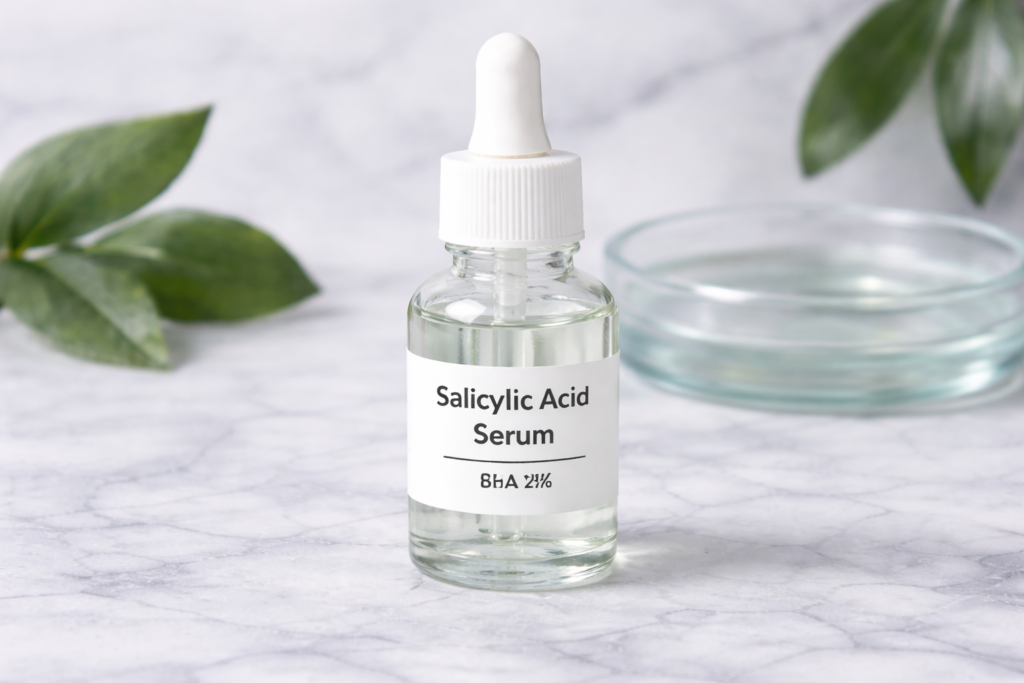
    Salicylic Acid Serum

    Salicylic acid serum has become one of the most trusted skincare products for people dealing with acne, blackheads, oily skin, and clogged pores. Whether you are a beginner in skincare or already using active ingredients, understanding how salicylic acid serum works can completely change your skin health.

    This powerful yet gentle exfoliating ingredient penetrates deep into pores, removes excess oil, and helps clear acne from the root. When used correctly, salicylic acid serum can give you smoother, clearer, and healthier-looking skin over time.

    In this blog, you will learn everything about salicylic acid serum — from its benefits and how it works to how to use it safely for different skin types.


    What Is Salicylic Acid Serum?

    It is a skincare product that contains salicylic acid, a type of beta hydroxy acid (BHA). Unlike alpha hydroxy acids (AHAs) that work on the surface of the skin, salicylic acid is oil-soluble. This means it can go deep into the pores and clean out oil, dirt, and dead skin cells.

    Because of this unique property, salicylic acid serum is especially helpful for:

    • Acne-prone skin
    • Oily skin
    • Blackheads and whiteheads
    • Enlarged pores
    • Congested skin

    It is commonly available in strengths ranging from 0.5% to 2% for over-the-counter skincare products.


    How Does It Work?

    Salicylic acid serum works in three main ways:

    1. Deep Pore Cleansing

    Since this serum is oil-soluble, it penetrates into oily pores and dissolves excess sebum. This helps unclog pores and prevent future breakouts.

    2. Gentle Exfoliation

    It exfoliates dead skin cells from the inside of the pore and the surface of the skin. This reduces rough texture and improves overall skin smoothness.

    3. Anti-Inflammatory Action

    Salicylic acid has calming properties that help reduce redness and swelling caused by acne. This makes it suitable even for inflamed pimples.


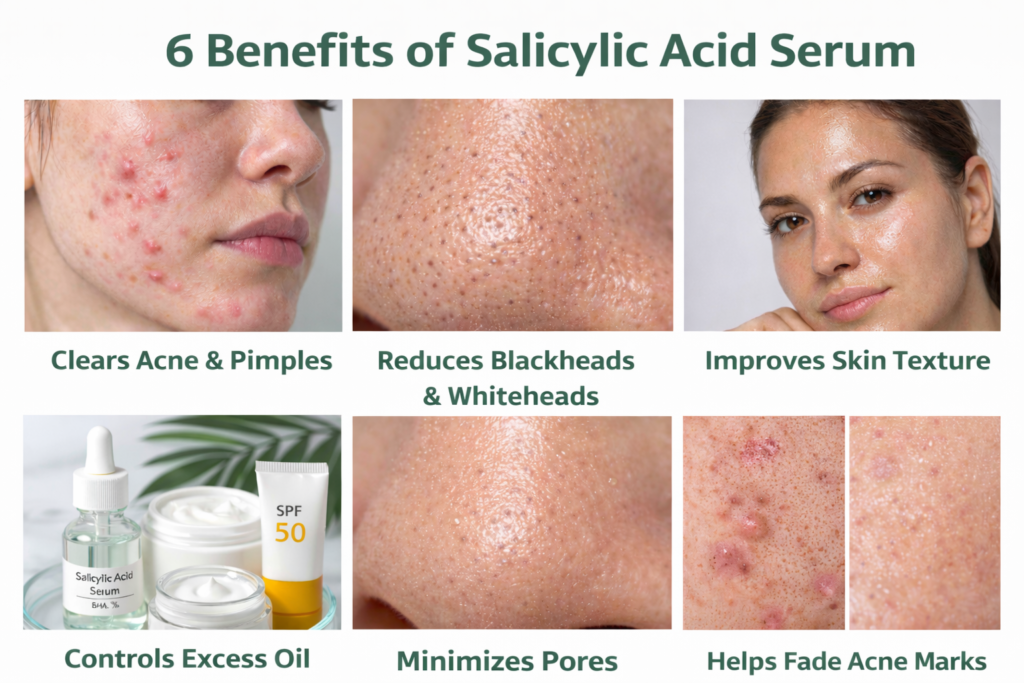
    Benefits of Using Salicylic Acid Serum

    Regular use of this serum can offer multiple skin benefits:

    . Clears Acne and Pimples

    One of the biggest benefits of this acid is acne control. It helps dry out active pimples and prevents new ones from forming.

    . Reduces Blackheads and Whiteheads

    By cleaning clogged pores, it reduces blackheads and whiteheads and keeps pores clear.

    . Controls Excess Oil

    This serum helps regulate oil production, making it ideal for oily and combination skin types.

    . Minimizes Pore Appearance

    Clean pores appear smaller, so your skin looks smoother and more refined.

    . Improves Skin Texture

    With regular exfoliation, skin feels softer and looks more even-toned.

    . Helps With Acne Marks

    While it is not a direct treatment for scars, consistent use can help fade post-acne marks over time.


    Who Should Use this ?

    This serum is best for:

    Who Should Be Careful?

    If you have very dry or sensitive skin, you should use this serum carefully. Start with a low concentration and limited frequency to avoid irritation.


    How to Use Salicylic Acid Serum (Step-by-Step)

    Using it correctly is very important to get results without damaging your skin.

    Step 1: Cleanse Your Face

    Use a gentle, non-stripping cleanser to remove dirt and oil.

    Step 2: Apply Salicylic Acid Serum

    Take 2–3 drops of this serum and gently spread it over your face or only on problem areas.

    Step 3: Moisturize

    Always follow with a hydrating moisturizer to prevent dryness.

    Step 4: Sunscreen (Morning Use)

    If you use this serum in the morning, apply a broad-spectrum sunscreen. Exfoliating acids can make skin more sensitive to the sun.


    How Often Should You Use It ?

    Frequency depends on your skin type:

    • Oily skin: Once daily or every alternate day
    • Acne-prone skin: 3–5 times a week
    • Sensitive skin: 1–2 times a week
    • Dry skin: Spot treatment or very limited use

    Always listen to your skin and reduce usage if you notice irritation.


    Common Side Effects

    Some people may experience:

    • Mild dryness
    • Peeling
    • Redness
    • Slight tingling

    These are normal when you start using salicylic acid serum. However, if you experience burning or severe irritation, stop use and consult a dermatologist.


    Can You Use Salicylic Acid Serum With Other Ingredients?

    Yes, but carefully.

    Safe to Use With:

    • Niacinamide
    • Hyaluronic acid
    • Ceramides
    • Aloe vera

    Use With Caution:

    • Retinol
    • Benzoyl peroxide
    • Other exfoliating acids (AHA, BHA, PHA)

    Using too many active ingredients together can damage your skin barrier.


    Salicylic Acid Serum for Different Skin Concerns

    . For Acne

    Use consistently to control breakouts and reduce inflammation.

    . For Blackheads

    Apply on nose and T-zone areas to clean clogged pores.

    . For Oily Skin

    Helps control shine and keeps skin fresh.

    . For Enlarged Pores

    Regular exfoliation makes pores look smaller.


    Myths About Salicylic Acid Serum

    Myth 1: It Makes Skin Thin

    Truth: Proper use does not thin the skin. It helps remove dead skin cells safely.

    Myth 2: It Is Only for Teenagers

    Truth: Adults with acne and oily skin can benefit equally.

    Myth 3: More Is Better

    Truth: Overusing this serum can cause irritation. Consistency is more important than quantity.


    Tips to Get Best Results From Salicylic Acid Serum

    • Start slow and increase usage gradually
    • Always moisturize after use
    • Never skip sunscreen
    • Patch test before full application
    • Do not combine too many strong actives

    How Long Does It Take to See Results?

    You may see:

    • Less oil in 1 week
    • Fewer breakouts in 2–3 weeks
    • Clearer pores in 3–4 weeks
    • Smoother texture in 4–6 weeks

    Skin improvement takes time, so be patient and consistent.


    FAQs

    1. Can I use it every day?

    Yes, if your skin tolerates it well. Start slow and increase frequency gradually.

    2. Is this serum good for sensitive skin?

    It can be used, but in lower strength and less frequently.

    3. Can this serum remove acne scars?

    It helps with acne marks and texture, but deep scars may need professional treatments.

    4. Can I use this serum with vitamin C?

    It is better to use them at different times (vitamin C in morning, salicylic acid serum at night).

    5. Is this serum good for blackheads?

    Yes, it is one of the best ingredients for treating blackheads.


    Conclusion

    This is a powerful yet beginner-friendly skincare ingredient that can transform acne-prone, oily, and congested skin. When used correctly, it helps clear pores, control oil, reduce breakouts, and improve overall skin texture.

    If you are struggling with pimples, blackheads, or excess oil, adding this serum to your routine can be a smart and effective choice. Just remember to start slow, moisturize well, and protect your skin with sunscreen.